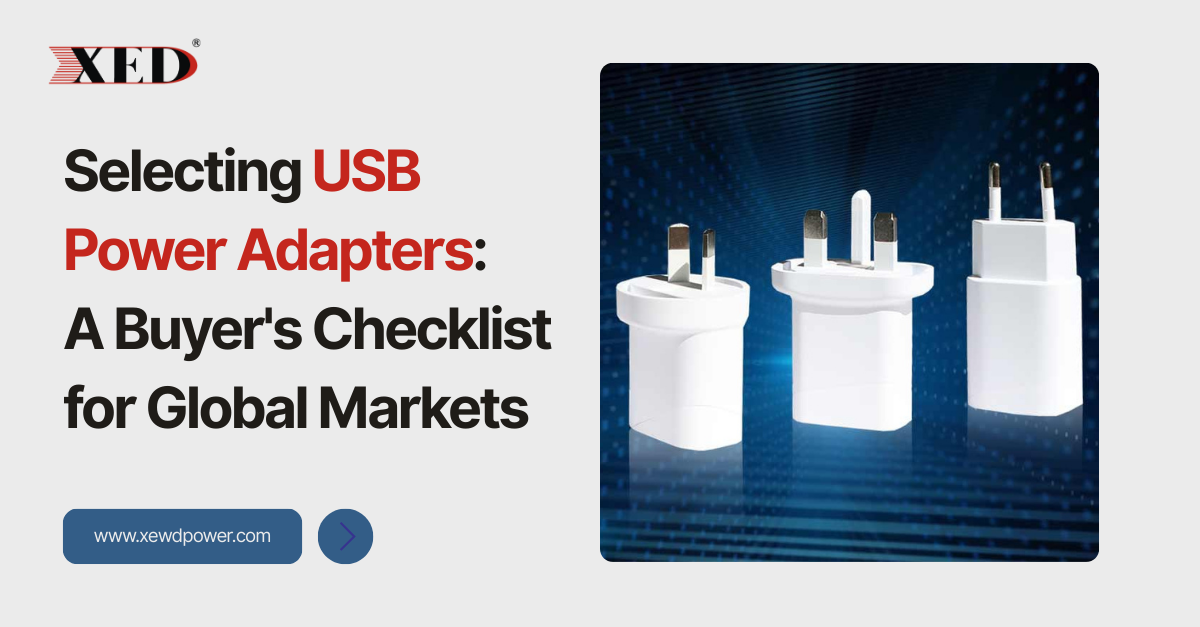
How to Choose the Right GaN PD Charger ?

In today's efficiency-driven digital era, charging devices have become indispensable companions. With the proliferation of electronic devices and their increasing performance, traditional charging solutions often fall short. USB Power Delivery (PD) fast-charging protocol, renowned for its exceptional universality and intelligence, combined with the innovative semiconductor material Gallium Nitride (GaN), is redefining the standards for the charging experience. This article provides a systematic exploration of PD charger technology evolution, core classifications, the advantages of GaN technology, practical selection guidance, and future industry trends.
I. Core Classification & Technical Analysis of PD Chargers
To select the most suitable charger, it's essential to first build a comprehensive understanding of PD charger technical categories. Modern PD chargers have established distinct product tiers based on power output, core technology, port configuration, and functional features.
1. Power Rating Classification: Full-Scenario Coverage from Portable to High-Performance
Power is a fundamental performance metric and a key factor determining a charger's application scenario.
-
Essential Portable Tier (18W-30W): Designed specifically for smartphones and small tablets, achieving an optimal balance between size and performance. For instance, an 18W PD charger can charge an iPhone to 50% in 30 minutes, while a 30W model better suits devices like the iPad Air. Products in this tier typically feature a single USB-C port, weigh under 50 grams, and are ideal for daily commutes and portability.
-
Mainstream Versatile Tier (45W-65W): Dubbed the "sweet spot" by the industry, this range simultaneously meets the power requirements of most thin-and-light laptops and mobile devices. A 65W PD charger can provide full-speed charging for a MacBook Air while also enabling fast charging for smartphones, truly realizing the "one charger for all" concept. Products in this tier often utilize GaN technology, delivering robust power while maintaining a compact form factor.
-
High-Performance Tier (100W): Engineered for high-performance laptops and mobile workstations, such as the 16-inch MacBook Pro and mobile graphics stations. These products require stable high-power output, usually feature multiple ports, and support simultaneous charging for several devices. Effective thermal management is crucial due to the higher power, resulting in a relatively larger size.
-
Ultimate Extended Tier (140W and above): Based on the latest USB PD 3.1 protocol specification, this tier extends voltage to 28V, 36V, and 48V, pushing the power limit increased to 240W. Designed for extreme performance needs, such as the latest 16-inch MacBook Pro, mobile workstations, and even some professional equipment, these products represent the current pinnacle of PD charging technology, albeit with greater demands on heat dissipation and size management.
2. Technology Material Evolution: The Revolution from Traditional Silicon to GaN
The choice of core material directly determines a charger's performance potential.
-
Traditional Silicon-Based Chargers: Utilize mature silicon-based semiconductor technology with excellent cost control but are limited by silicon's physical properties. At high power outputs, switching frequency cannot be significantly increased, leading to larger transformer and capacitor components and overall efficiency bottlenecks. Primarily used in entry-level markets and specific industrial applications.
-
Gallium Nitride (GaN) Chargers: As representatives of third-generation semiconductor materials, GaN devices exhibit electron mobility several times higher than silicon, allowing for a substantial increase in switching frequency. This characteristic enables reductions in transformer and capacitor volume to 1/3 or 1/2 of traditional solutions at the same power rating. Additionally, GaN devices offer better thermal conductivity and higher energy conversion efficiency, resulting in significantly lower operating temperatures. Presently, GaN technology has become the standard configuration for mid-to-high-end PD chargers, with ongoing optimization for cost and performance.
3. Port Configuration Strategy: From Single Focus to Multi-Device Synergy
Port configuration reflects the intended use case scenario for the charger.
-
Single-Port Chargers: Focus on delivering the ultimate charging experience for a single device, typically providing sustained stable output at the rated power. Simple, reliable structure with cost advantages, suitable for users who only have one device and pursue portability.
-
Multi-Port Chargers: The ideal choice for modern multi-device users, common configurations include 2C1A, 3C1A, etc. The core challenge for multi-port design is intelligent power distribution – when multiple ports are used simultaneously, the charger must dynamically adjust output power for each port. High-quality multi-port PD chargers provide clear power distribution tables, such as "Single Port: 65W, Dual Port: 45W+18W," requiring users to select based on their specific device combination.
4. Functional Feature Segmentation: Meeting Specific Scenario Demands
Beyond core performance, differentiated features have become significant product selling points.
-
PD Chargers with PPS Support: PPS (Programmable Power Supply) is a vital addition to the PD 3.0 protocol, supporting voltage fine-tuning in 20mV steps. This feature is crucial for the super-fast charging of Samsung Galaxy series and Xiaomi devices, enabling higher efficiency and reduced heat generation during charging.
-
Folding Prong Design: More than just an aesthetic consideration, folding prongs effectively prevent damage to other items during transport and daily carry, representing a key aspect of portability. Premium products often incorporate reinforced structures in the prong assembly to ensure stability after thousands of folding cycles.
-
Desktop Chargers: Positioned as the power center for personal workstations, typically equipped with four or more ports supporting simultaneous charging for multiple devices. Superior products employ vertical designs and active cooling technology to ensure stability during prolonged high-load operation.
II. The Unique Value & Systematic Selection Guide for GaN PD Chargers
Building upon a comprehensive understanding of PD charger technical categories, it is necessary to delve deeper into the currently prominent GaN PD charger – a technological model combining advanced materials science with intelligent charging protocols.
1. GaN PD Chargers: Technical Definition & Core Principles
GaN PD chargers represent the perfect fusion of Gallium Nitride power devices and the USB Power Delivery fast-charging protocol. Technically speaking, all GaN chargers support the PD protocol, leveraging the superior physical properties of GaN material to achieve performance breakthroughs unattainable by traditional silicon-based PD chargers.
As a wide-bandgap semiconductor material, GaN boasts a breakdown electric field strength 10 times that of silicon and an electron saturation drift velocity 2.5 times higher. These physical properties translate into three major technical advantages: higher switching frequency allow for smaller passive components; higher efficiency reducing energy loss; better thermal conductivity improving heat dissipation. These advantages establish GaN PD chargers as the current peak of charging technology development.
2. Detailed Technical Advantages: Comprehensive Enhancement from Specs to Experience
The benefits of GaN PD chargers extend beyond technical specifications, translating into tangible user experience improvements.
-
Exquisitely Compact Design Aesthetics: At the 65W power level, traditional silicon-based chargers typically exceed 100 cm³ in volume, while GaN solutions can be contained within 50-60 cm³, a reduction of over 40%. This miniaturization not only enhances portability but also reduces power strip space usage, contributing to a cleaner workspace.
-
High Efficiency & Low-Temperature Performance: Actual measurements indicate that GaN chargers typically achieve 2-4% higher efficiency under full load compared to silicon-based products, meaning a 65W charger could save nearly 3 kWh of energy annually. Simultaneously, surface temperatures during sustained high-power output are 5-10°C lower than conventional solutions, enhancing both safety and component lifespan.
-
Exceptional Power Density Metrics: Power density, measured in W/in³, is the gold standard for assessing charger technology. Mainstream GaN PD chargers have now surpassed 1.2 W/in³, with top-tier products reaching 1.8 W/in³, compared to traditional solutions typically in the 0.6-0.8 W/in³ range. This metric directly reflects technological advancement and design capability.
3. Systematic Selection Strategy: Precise Matching from Needs to Configuration
Faced with a plethora of products, developing a systematic selection mindset is crucial.
-
The Golden Rules of Power Selection:
-
Smartphone Users: 18W-30W is the sweet spot, but opting for 30-35W offers better future-proofing. Tests show that a 30W charger charges an iPhone at a similar rate to a 20W charger for the first 30 minutes but maintains high power for a longer duration subsequently.
-
Tablets & 2-in-1 Devices: 30W-45W is ideal, meeting the full-speed charging needs of devices like the iPad Pro and Surface Go.
-
Thin-and-Light Laptops: 65W and above is recommended, especially for modern ultrabooks adopting unified USB-C charging.
-
High-Performance Mobile Workstations: Require 100W or higher, ensuring the charger supports the 20V/5A PD extended profile.
-
-
Intelligent Consideration of Port Configuration:
-
Single-Device Power Users: A single-port charger remains the best choice, guaranteeing access to the full rated power.
-
Multi-Device Office Scenarios: 2C1A or 3C1A configurations are more practical, but require careful study of the product's multi-port power distribution strategy. Quality products provide clear power allocation tables.
-
-
Nuanced Control of Protocol Compatibility:
-
Basic PD Protocol: Must be supported; this is the guarantee of universality.
-
PPS Protocol: Samsung users should prioritize this, as it's key to achieving 25W/45W Super Fast Charging.
-
Manufacturer Proprietary Protocols: Such as Huawei SCP (22.5W/40W), Xiaomi Fast Charging, etc., require checking product specifications for explicit support.
-
-
Safety Certifications & Quality Assurance:
-
Fundamental safety certifications include China's CCC, the EU's CE, and the US's UL – these are basic safety thresholds.
-
Regarding brand selection, market leaders like Anker, UGREEN, and Baseus generally offer more reliable quality control, after-sales service, and actual performance.
-
Be aware of misleading claims; quality products provide detailed technical specifications and test reports.
-
4. Comprehensive Device Compatibility Self-Check Guide
Ensuring perfect compatibility between your devices and a GaN PD charger requires verification across multiple dimensions.
-
Apple Ecosystem Users: All models from iPhone 8 onwards support PD fast charging but require an MFi-certified USB-C to Lightning cable. The iPad Pro/Air series also supports it, with power requirements increasing with screen size.
-
Android Device Users: Check the path usually found in "Settings -> Battery -> Charging Settings," or consult the device specifications. Some brands, like Samsung, may require a brief wait after connection to trigger maximum power fast charging.
-
Laptop Users: Check the power specification label on the device bottom or official technical parameters to confirm standard charging power and voltage requirements. Most modern thin-and-lights support PD charging, but high-performance devices like gaming laptops may require dedicated chargers.
-
The Critical Role of Cables: Even the best charger requires a suitable cable. Huawei SCP fast charging needs special cables supporting 6A current; 100W PD fast charging requires 5A cables with an E-Marker chip; standard 3A cables have a 60W power cap. Choosing reputable brand cables is recommended to avoid charging issues caused by poor cable quality.
Through the above systematic analysis and guidelines, users can not only understand the technical essence of GaN PD chargers but also make precise choices based on their needs, enjoying the convenience and efficiency brought by technology.
》》Related product recommendations : 45W Type-c GaN PD charger DC 5V-3A/9V-3A/12V 3A/15V 3A/20V 2.25A output FCC, EN55032, GB4943, GB8898
III. GaN PD Charger Market Dynamics & Cutting-Edge Insights
After grasping the technical features and selection criteria for GaN PD chargers, understanding their market status and industry dynamics will provide better insight into the development path and value proposition of this technology.
1. Industry Growth Trends & Market Size
According to the latest industry analysis, the global GaN consumer electronics market is experiencing explosive growth. From $1.56 billion in 2023, it is projected to grow to $2.37 billion by 2025, with a CAGR exceeding 23%. This growth is primarily driven by three factors: replacement demand fueled by major phone brands phasing out included chargers; laptop manufacturers accelerating the adoption of GaN technology in original chargers; and continuously rising consumer demand for portable high-power charging. Notably, mainstream brands like Apple, Samsung, and Xiaomi have fully transitioned to GaN technology solutions in their flagship models, significantly driving market penetration.
2. Supply Chain Landscape & Technological Innovation
At the industry chain level, profound changes are occurring in GaN technology and market structure. Chinese manufacturers are performing prominently in the GaN supply chain, with companies like Innoscience and Navitas steadily increasing their global market share. Technologically, mass-produced GaN-on-Si devices have evolved from the initial 650V platform to the 900V platform, laying the groundwork for higher-power applications. Regarding production capacity, global 8-inch GaN-on-Si wafer capacity is expected to exceed 40,000 pieces per month by 2024, with costs subsequently dropping by over 30%, significantly narrowing the price gap between GaN chargers and traditional silicon-based chargers.
3. Product Form Innovation & Scenario Expansion
Beyond performance improvements, innovation in product form factors is continuously advancing. 2-in-1 designs are becoming a new trend; for instance, Anker's Prime series combines a 100W GaN charger with a 10,000mAh power bank, enabling seamless switching between wired fast charging and wireless top-ups. On the other hand, professional-grade products are constantly pushing power limits, such as Hyper's 270W four-port GaN charger, capable of simultaneously providing full-speed charging for two laptops and two phones. Regarding scenario expansion, GaN technology is penetrating beyond consumer electronics into automotive electronics, industrial power supplies, and data centers, demonstrating broad application prospects.
IV. The Future Evolution of PD Chargers
Based on current technological developments and market demands, PD chargers are evolving towards greater intelligence, efficiency, and integration, with multiple technical pathways developing in parallel.
1. Intelligent Evolution at the Protocol Level
The next generation of PD protocols will continue to deepen intelligent features. The AVS (Adaptive Voltage Scaling) characteristic introduced in the PD 3.2 protocol enhances voltage regulation accuracy from the traditional 20mV level to the 100mV level, achieving finer "stepless" voltage matching. This is expected to increase energy conversion efficiency from the current ~94% to over 97%, further reducing thermal energy loss during charging by 25%. Concurrently, security at the protocol level is being strengthened, including features like encrypted digital certificates, real-time temperature monitoring, and dynamic load adjustment to ensure a safe and reliable charging process.
2. Technology Integration & System Innovation
Future PD chargers will transcend their role as mere power adapters, evolving into intelligent energy nodes. The introduction of AI technology will enable chargers to learn user habits and intelligently adjust output strategies; integration with the Internet of Things (IoT) will enable remote monitoring and energy management; and the fusion with wireless charging technology will create a seamless charging experience. At the materials science level, alongside the continuous optimization of GaN, new technologies like hybrid Silicon Carbide (SiC) and GaN solutions, and vertical structure GaN devices are achieving breakthroughs in the laboratory stage, expected to commercialize within the next 3-5 years.
3. Application Ecosystem & Standardization Process
With the penetration of USB4 and Thunderbolt 4 interfaces, the ecological status of the PD protocol will be further consolidated. It is estimated that by 2026, the number of devices supporting the PD protocol will exceed 5 billion, covering phones, tablets, laptops, monitors, automobiles, and even smart home devices. Regarding standardization, the EU has promoted legislation for unified charging interfaces, and China has released the Mobile Terminal Fusion Fast Charging Technical Standard; these policies will accelerate the process of the PD protocol becoming a global unified standard. Simultaneously, green environmental requirements are also driving chargers towards higher efficiency, recyclable materials, and longer service life.
Conclusion
From basic power delivery to intelligent protocol negotiation, and from bulky traditional designs to exquisite GaN innovation, the trajectory of charging technology clearly demonstrates how technological progress profoundly improves the user experience. Through the systematic analysis in this article, we hope readers can not only gain a comprehensive understanding of the current technological landscape and market dynamics of PD chargers, master precise selection methods, but also gain insight into future technological directions.
In this era of rapid innovation, charging technology has evolved from a purely functional product into a vital component of the smart life ecosystem. The future PD charger will not be a simple power adapter but an efficient, intelligent, and seamlessly connected energy management center within the personal digital ecosystem. With continuous technological breakthroughs and ever-expanding application scenarios, we can reasonably anticipate the arrival of a new era of more convenient, efficient, and unified charging experiences.
For consumers, staying informed about technological trends and understanding the needs of their own devices will help them consistently make the most suitable choices in this innovative field, fully enjoying the convenience and benefits brought by technological advancement.
Instead of fast food fashion concept, vetiver is based on the idea of the wearer, not limited to the scope of age or season. At every time of the day, every region and every place can freely change and connect smoothly. Vetiver skillfully combines leisure style and soft multi-functional materials to create a clothing piece valued by fearless and confident women.
How IP67 Waterproof Power Supplies Serve as the Guardian of Security Systems ?
PD Chargers: A Complete Guide to Buying and Troubleshooting