Selecting USB Power Adapters: A Buyer's Checklist for Global Markets

I. What is a USB Power Adapter?
A USB power adapter is fundamentally an AC (Alternating Current) to DC (Direct Current) converter. It transforms the high-voltage, unstable AC power from a wall socket (e.g., 220V/50Hz) into the low-voltage, stable DC power required by electronic devices (most commonly 5V).
Its core functional modules include: high-voltage filtering and rectification, power conversion (via a switching circuit), low-voltage output filtering, and the crucial control and protection circuitry. High-quality adapters integrate multiple protection mechanisms such as over-voltage, over-current, over-temperature, and short-circuit protection. Acting like a diligent "power guardian," these features promptly cut off output during anomalies to protect the connected, often expensive, electronic equipment.
Featured Product Reference: Explore our series of UL/CE/CB Certified Universal USB Adapters, engineered with robust multi-protection circuitry for ultimate device safety.
II. Going Global: Plug Specifications & Market Access Certifications
Selling USB power adapters internationally involves navigating two critical hurdles: the physical plug type and the stringent regulatory certifications. Both are indispensable "passports" for legal market entry.
Quick-Reference Table: Global Plug Types & Mandatory Certifications
| Country/Region | Common Plug Type (Visual Reference) | Core Mandatory Market Access Certification(s) |
| China | Chinese 2/3-pin flat plug | CCC Certification (China Compulsory Certification) |
| European Union | Euro 2-pin round plug | CE Marking. From late 2024, devices with wireless charging >50W must feature USB-C with USB PD support. |
| North America (US/CA) | US 2-pin flat plug | While not federally mandated, UL (US) or CSA (Canada) certification is a de facto market requirement. |
| United Kingdom | UK 3-pin rectangular plug | UKCA Mark (gradually replacing CE for the UK market) |
| Australia / New Zealand | AU/NZ 2-pin angled plug | SAA Approval (AU) + RCM Mark (NZ, covers safety & EMC) |
| Japan | US-style 2-pin flat plug (non-polarized) | PSE Mark (Diamond or Circle shape) |
| South Korea | Euro 2-pin round plug | KC Certification |
Product Recommendation: Simplify global sourcing with our Worldwide Plug Adapter Series (US/EU/UK/AU), each variant pre-certified for its target region.
Key Trends & Insights:
- The "Dual-Compliance" Rule: Market access typically requires satisfying both safety certifications (like CCC, CE) and emerging connector regulations. Legislations in the EU, South Korea, Saudi Arabia, and others now mandate USB Type-C ports with USB PD fast-charging support for many devices, adding a new legal layer beyond traditional safety approvals.
- The Role of USB-IF Certification: The USB-IF compliance program is a voluntary compatibility certification ensuring products meet USB technical standards. To aid manufacturers with EU compliance, USB-IF offers the "IEC 62680 Compliance Program," an efficient path to demonstrate conformity.
- Design Compliance is Critical: For markets like Australia/New Zealand, standards strictly forbid using molded "international" plugs (e.g., US or EU types) as an integrated part of the device. Designs must adhere to local plug specifications.
III. Risk Alert: Consequences of Substandard Adapters & Misuse
Using inferior USB power adapters to cut costs, or incorrect usage practices, is akin to planting a "time bomb" with severe repercussions.
-
Life Safety Hazards: This is the most severe risk. Cheap adapters save costs by using poor components, omitting protection circuits, and failing insulation standards, leading to internal short circuits, overheating, melting, or even fire. Worse, high voltage can breach isolation and reach the low-voltage USB port, posing an electrical shock risk to users.
-
Equipment Damage Hazards: Unstable output voltage (e.g., spiking from 5V to 9V) or high ripple current can fry the motherboard or power management chips of connected devices. For security systems, this can mean a complete camera failure; for medical devices, it could cause malfunction or inaccurate readings.
-
Performance & Hidden Cost Risks:
-
Low Efficiency: Significant energy waste as heat, resulting in slow charging and higher electricity bills.
-
Electromagnetic Interference (EMI): Non-compliant EMC performance can disrupt Wi-Fi, Bluetooth, and other wireless signals, causing video lag in security streams or smart home device dropouts.
-
Short Lifespan: Operating under high thermal and electrical stress, subpar adapters may fail within months, increasing replacement costs and operational risks.
-
Common Misuses: Continuously powering high-drain devices with under-rated adapters (causing overload), using standard adapters in harsh environments (high temperature, humidity), or using damaged/low-quality USB cables.
IV. Industry-Specific Selection Guide
Different industries have distinct priorities when selecting USB power adapters. Taking a compliant manufacturer's product line—featuring certifications like CE, UL, CCC, and offering 5V/1A-2A USB-A models—as an example, we can analyze specific industry needs.
Featured Product Reference: Our Industrial-Grade 5V/2A Power Adapter is a reliable foundation for various low-power applications across industries.
1. Security & Surveillance: Stability is Paramount
Typical Devices: IP Cameras (IPC), Access Control Controllers, Alarm Panels, Intercom Systems.
Core Need: 24/7 uninterrupted, reliable operation. The power supply is the foundation of any security infrastructure.
Selection Checklist:
-
Rigorous Stability Testing: Conduct 72-hour continuous full-load burn-in tests on samples before bulk purchase.
-
Power Redundancy: Choose an adapter with a current rating 30-50% higher than the device's maximum requirement (e.g., use a 5V/2A adapter for a 5V/1A IPC).
-
Protection & Clean Output: Ensure complete protection circuits. Low ripple noise is critical to prevent video interference like stripes or flickering.
-
Environmental Suitability: For outdoor or enclosed spaces (e.g., junction boxes), consider waterproofing, ingress protection ratings, and thermal design.
2. Consumer Electronics: Safety & Basic Compatibility
Typical Devices: Older Phones, Bluetooth Earphones/Speakers, Low-Capacity Power Banks, E-readers, Mini Fans/Lights.
Core Need: Economical and safe charging for non-fast-charge devices.
Selection Checklist:
-
Mandatory Certifications: Always buy branded products with the target market's mandatory certification (e.g., CCC for China).
-
Right-Sized Power: 5V/1A or 2A is often sufficient. Using overly powerful fast-chargers offers no benefit for small batteries.
-
Portability: Compact and lightweight designs are ideal for travel or as promotional gifts.
3. Smart Home / IoT: Long-Term Reliability & Low Interference
Typical Devices: Smart Hubs, Sensors, Smart Plugs, Wi-Fi Cameras.
Core Need: Plugged in permanently without disrupting the home wireless environment.
Selection Checklist:
-
Low No-Load Power Consumption: Essential for always-on devices.
-
Wide Voltage Input: Tolerates unstable grid voltage in rural or older areas.
-
Good EMC Performance: Prevents the adapter's EMI from disrupting 2.4GHz Wi-Fi bands, a common cause of device disconnections.
4. PC Peripherals & Office: Clean Power & Load Capacity
Typical Devices: USB Hubs, External Audio Interfaces/Hard Drives, Receipt Printers, Barcode Scanners.
Core Need: Provides pure, adequate, and stable power for multiple or precision peripherals.
Selection Checklist:
-
Adequate & Clean Power: Calculate total potential power draw for multi-port hubs. Low ripple is vital for audio fidelity with DACs or interfaces.
-
Durable Connectors: Withstands frequent plugging/unplugging in office settings.
5. Medical & Wellness Devices: The Highest Safety Standard
Typical Devices: Electronic Thermometers, Blood Pressure Monitor Bases, Massagers, Portable Monitors.
Core Need: Involves user safety, requiring the highest levels of power supply safety, reliability, and EMC.
Selection Checklist:
-
Non-Negotiable Certifications: Use adapters with medical-grade or high-spec industrial certifications. CCC is the baseline for China.
-
Prefer OEM or Officially Certified Models: Medical device power design is precisely matched to internal circuitry. Third-party adapters, even with matching V/A, may affect accuracy or safety due to subtle ripple or timing differences.
-
Minimal EMI Leakage: Ensures the adapter doesn't interfere with the device's sensitive bio-signal monitoring.
V. Universal Gold Rules for Selection
Regardless of the industry, following these steps minimizes risk:
-
Match Parameters: Check the device's "INPUT" label. The voltage (V) must match exactly. The adapter's output current (A) should be equal to or greater than the device's requirement.
-
Verify Authentic Certifications: Confirm that product markings are genuine. Request test certificates and verify them on the issuer's website if possible.
-
Choose Brand & Build Quality: Prioritize reputable brands. A product that feels solid, has tight seams, sturdy pins, and thick cables typically indicates better construction.
-
Match the Environment: Select products with appropriate ingress protection (IP) ratings for outdoor, humid, or dusty locations.
Conclusion
The USB power adapter, though small, is the critical "gateway" connecting the power grid to our electronic devices. In fields like security and healthcare, it is the cornerstone of system reliability. From understanding global compliance to recognizing industry-specific needs and heeding potential risks, informed decision-making begins with systematic knowledge. On the balance between cost and safety, the weight must always fall on the side of safety and reliability, for the potential cost of failure far outweighs the price of a quality adapter.
The Hidden Costs of Unmanaged PoE Switches
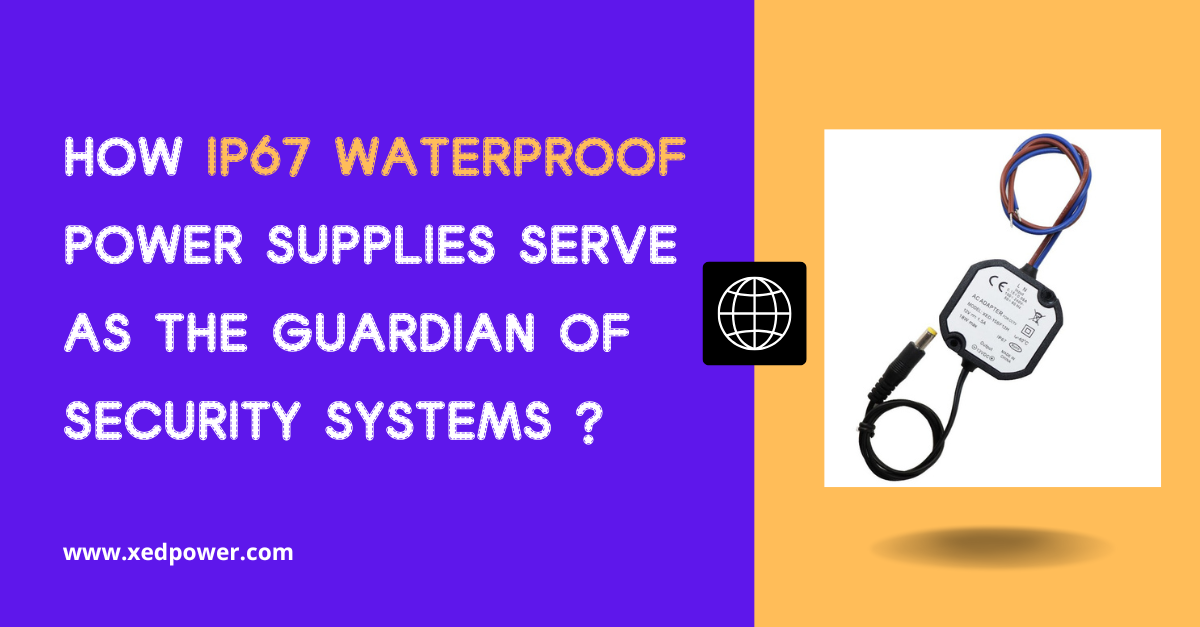
How IP67 Waterproof Power Supplies Serve as the Guardian of Security Systems ?